
Ever moved your cursor with your tongue?
This week was kind of insane. Two wearables blew up on X, Europe minted its first robot unicorn, Travis Kalanick pulled another $1.7B into his robotics play, and an open model out of China quietly grabbed the coding crown. Here's what caught our eye.
The model race: open source grabs the crown while Google's flagship slips
Two data points this week tell you where frontier models really are.
First, Moonshot AI dropped Kimi K3, a 2.8-trillion-parameter open-weight model that is now the largest open model ever shipped. It took the #1 spot on Arena.ai's Frontend Code Arena over Claude Fable 5, GPT-5.6 Sol and Grok 4.5. The previous generation sat at #18. K3 landed at #1 in a single release, topping six of seven front-end categories.
Then there's Google, which kicked off its most ambitious pretraining run yet for Gemini 4 while quietly admitting Gemini 3.5 Pro still isn't ready to ship. It did drop Gemini 3.5 Flash Cyber, a security-tuned model for a narrower set of partners.
The base-model race has gotten so long and so expensive that Google announces the next flagship before the current one lands, while an open-weight model you can run yourself quietly takes the coding crown.
Robotics: Europe's first unicorn, and Kalanick's $1.7B bet
London-based Humanoid raised a $152M Series A at a $1.35B post-money valuation, calling itself Europe's first pure-play humanoid robotics unicorn. Two years old, $270M raised to date, and a customer list that reads like a supply-chain conference. SAP, NVIDIA, Bosch, Siemens. It already signed the industry's largest publicly announced commercial deal with Schaeffler to put thousands of robots on factory floors, with beta units shipping Q4.
Bigger cheque, same theme. Uber co-founder Travis Kalanick pulled $1.7B into Atoms, his physical-AI company, in a round led by a16z with Ben Horowitz taking a board seat. Atoms grew out of his CloudKitchens years and now goes after industrial automation across food, mining and transportation. In a full-circle twist, Uber, the company that forced him out in 2017, joined the round.
The capital that spent five years chasing chatbots is moving hard into machines that actually pick things up. Robotics funding used to be a US-and-China story. Now Europe has a name on the board too.
We've said it a couple of times already, and we'll say it again. Robotics is going to be a huge market, and whoever wants to win the AI race has to get their hands into hardware, robotics especially.
OpenAI Presence: agents get a control panel
OpenAI also shipped Presence, an enterprise platform that connects AI agents to internal systems and gives companies one shared foundation for context, policies, permissions, guardrails, approved actions and evaluations. In plain terms, it's the plumbing that turns a cool agent demo into something a real company will actually deploy.
This is the less glamorous half of the agent story, and it's the half that matters for anyone shipping to real clients. Everyone can build an agent that does something impressive once. The hard part is guardrails, audit trails, and being able to prove what the agent is and isn't allowed to touch.
The companies selling seatbelts might end up doing better than the ones selling the car.
Wearables gone viral: Garmin ditches the subscription, Augmental ditches your hands
Two wearables owned tech X this week, and both landed because they refuse a tax everyone else takes for granted.
Garmin launched CIRQA, a screenless health band aimed straight at Whoop. €199.99, a fabric ComfortFit strap in four colors, up to 10 days of battery, and it tracks 80+ activities with automatic detection plus heart rate, Pulse Ox, HRV, skin temperature, stress, sleep, Body Battery, VO2 Max and connected GPS through your phone. No screen to babysit, no subscription to renew. That last part is the kill shot. Whoop charges $199 to $359 a year just to keep the device you already bought alive. Garmin priced the entire band at roughly one year of Whoop, and it ships today.
Then the one nobody saw coming. Augmental took its MouthPad public across the US, a custom retainer that sits over your upper teeth with a pressure-sensitive trackpad resting on the palate. You drive a cursor, click and swipe with your tongue, and paired with head tracking it fully controls a phone, tablet or computer, completely hands-free. This is already real. More than 100 people with mobility challenges use it daily, some up to 16 hours a day, at $1,400 plus a dental scan. Augmental shipped a companion mic pendant called Vox alongside it.
Wearables are quietly the most interesting hardware category again, because the fight moved from specs to business model and interface. Garmin is betting people are done renting their own health data. Augmental is showing that the next input method might not involve your hands at all. Assistive tech has a long habit of previewing where mainstream interfaces end up, so keep MouthPad on your radar even if you never put one in.
This roundup first went out to our Dotbite Tech Pulse subscribers. Want it in your inbox, too?
Frequently Asked Questions
What is the Augmental MouthPad and how does it work?
It is a custom dental retainer that sits over the upper teeth with a pressure-sensitive trackpad resting against the palate. You move a cursor, click and swipe with your tongue, and combined with head tracking it fully controls a phone, tablet or computer without using your hands. More than 100 people with mobility challenges already use it daily, some up to 16 hours a day.
How much does the Augmental MouthPad cost?
It is $1,400 plus a dental scan, and it went on sale across the US in July 2026. Augmental also shipped a companion microphone pendant called Vox alongside it.
What is Kimi K3 and why does it matter?
Kimi K3 is a 2.8-trillion-parameter open-weight model from Moonshot AI, the largest open model shipped so far. It took first place on Arena.ai's Frontend Code Arena ahead of Claude Fable 5, GPT-5.6 Sol and Grok 4.5, topping six of seven front-end categories. The previous generation had been sitting at number 18.
Is the Garmin CIRQA cheaper than Whoop?
The CIRQA costs 199.99 euro once, with no subscription. Whoop charges $199 to $359 a year to keep a device you already own working. Garmin priced the entire screenless band at roughly one year of Whoop, with up to 10 days of battery and tracking for 80+ activities.
What is OpenAI Presence?
An enterprise platform that connects AI agents to internal systems and gives a company one shared foundation for context, policies, permissions, guardrails, approved actions and evaluations. It is the plumbing that turns an agent demo into something a company can actually deploy, with audit trails and provable limits on what an agent may touch.
Get the Tech Pulse
Every month we research and write down what actually moved in tech and AI. Plus tips and tricks on how to use AI. You don't want to miss this.
Join Tech PulseYou might also like
October 9th, 2026
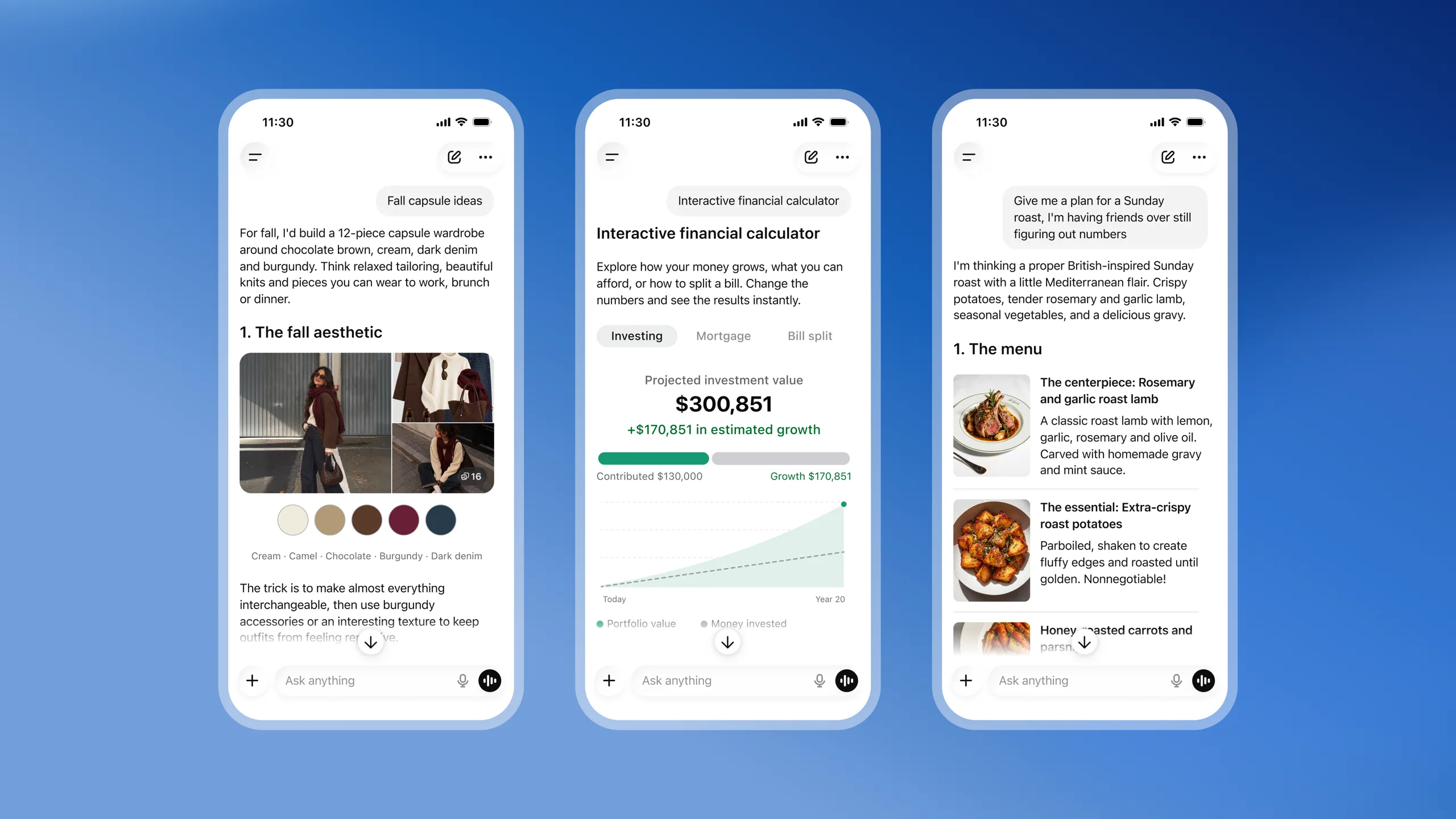
Websites are locking AI agents out at the checkout
Websites block AI agents at checkout, ChatGPT answers with Intelligent UI, Mistral Large 4 lands, Haiku 5.5 ships, and Pony.ai heads to London.
October 7th, 2026
Zapier vs. Laravel and when your own code pays off
Zapier, Make and n8n bill per task, credit or execution. When a small Laravel application becomes cheaper and more reliable, with a worked example.
October 2nd, 2026
OpenAI launched Dots, agents with their own computer
OpenAI launched Dots, always-on agents with their own computer, Gemini 4 Argon stays gated, Cloudflare lets agents pay, and Apple plans a HomePad.
Ready to connect the dots?

Hi, I’m Emir, CEO and Co-Founder of Dotbite.
You have an interesting idea for a digital project and are looking for a sparring partner pushing the challenge through with you?
You’ve come to the right place.
