
Google's first data center satellite is online and writes haiku
This week the future showed up in two sizes. Google has a satellite running a language model in orbit, and Uber reports that AI agents booked exactly four rides in its busiest week of October. The actual state of AI sits somewhere between those two numbers. Anthropic adds a warning that it may soon be hard to tell who is building whom, Meta buys the cockpit for coding agents, and OpenAI ships a security model it rates "Critical".
Google: A data center in orbit that writes haiku
Google's first Suncatcher prototype is online and talking to the ground. It launched earlier in October on a Falcon 9, spent about three weeks in commissioning and now runs DeepMind's Gemma 4. The first test prompt was a haiku about being in space. Limericks followed.
The hardware is modest. There are four TPUs on board, only one can run at a time, power is roughly 1 kW, and a TPU runs for about 20 minutes at a stretch. Google wants to learn how the chips handle radiation and thermal stress. Ground tests suggest inference copes fine, while training could be a bigger problem.
Two more satellites with better chips and optical links between them are planned for 2027. Google itself calls the whole thing a moonshot aimed at the 2030s, and a peer-reviewed analysis says Starship would need around 1,800 flights to make the economics work.
So it's poetry for now, and a very expensive way to find out whether the idea survives a bit flip.
Anthropic: "We may soon hit recursive self-improvement"
Buried in Anthropic's revised S-1/A is a risk factor with teeth. Internal estimates suggest future models could soon meet the company's own Responsible Scaling Policy definition of "dramatically accelerated progress attributable to AI". No current model is classified as past that line, and Anthropic says it is still assessing the data.
It also admits it has missed acceleration in its own development before and only noticed afterwards. Anthropic says it does not expect to safely let Claude design successive frontier models without meaningful human oversight, and it is considering RSP updates to keep people in the loop.
TechCrunch points out that an S-1 is both a disclosure and a marketing document, so skeptics can read the RSI language either way. Fair. Still, a lab telling investors it might miss its own speedup is rare.
For you the practical read is boring. Plan for tooling that changes faster than your quarterly roadmap.
Uber: Four rides, zero panic
On its Q3 call, Uber said only four rides were ordered through an AI agent in its busiest October week, out of about 320 million trips and orders across Uber and Uber Eats. Eats did better, with 500 orders from agents. DoorDash told a similar story the week before, with a few hundred.
CEO Dara Khosrowshahi called it "very, very early and very limited traction". His own maths explains why. Booking a ride in the app takes about 50 seconds, and reordering a favorite meal about 90. An agent has to beat that, and so far it mostly doesn't.
Meanwhile Meta says its Muse assistant passed 10 million users and many of them shop through it. So the demand might arrive through assistants people already like and use every day.
If your client pitch this quarter is "let's make it agent-ready", is anyone actually going to use it? Ask that before you scope it.
Meta: Buying the cockpit for coding agents
Meta acquired Conductor, a startup that lets developers run several coding agents at once in parallel workspaces. The agents come from Anthropic, OpenAI and others, and Conductor works as the control layer. It runs in the cloud, locally or from your phone.
Conductor's cloud service shuts down on 20 November, and after that user cloud data gets deleted. Core features keep working until early next year. If you or your freelancers use it, export what you need soon.
Meta launched its own coding agent, Muse Code, in August, and has now bought the tool people use to orchestrate other labs' agents. That reads like a company that wants a seat at the developer's desk, right next to the model dropdown.
Orchestration is turning into its own product category, and whoever owns it decides which model gets your next task.
OpenAI: GPT-6 Cyber gets the "Critical" label
OpenAI announced GPT-6 Cyber. It's built for authorized vulnerability discovery and exploit development, and OpenAI rates it "Critical" for cybersecurity under its Preparedness Framework, up from "High" for GPT-5.6 Cyber. Access is limited to approved Daybreak Red customers through the API and Codex.
The results are concrete. Researchers found 81 previously unknown high-severity flaws in Firefox, and Mozilla has started shipping fixes. In a Linux kernel run, the model reproduced 1,724 vulnerabilities and built working exploits for 948, for about $1.2 million in API credits. On the ExploitGym benchmark it scores 48.5%, against 32.1% for its predecessor.
Security researcher Chris Hughes welcomed the drop in out-of-scope actions and warned that at scale even a small rate means unauthorized actions. He also pointed out that fewer than 25% of the flaws found have been fixed so far.
Finding bugs is getting cheap, but somebody still has to fix them. So ask your clients when their last dependency audit happened.
This roundup first went out to our Dotbite Tech Pulse subscribers. Want it in your inbox, too?
Frequently Asked Questions
What is Google Suncatcher and what does the first satellite do?
Suncatcher is Google's project for data centers in orbit. The first prototype satellite launched in October 2026 on a Falcon 9, carries four TPUs of which only one runs at a time, and runs DeepMind's Gemma 4 on roughly 1 kW of power. Its first test prompt was a haiku about being in space. Two more satellites are planned for 2027.
Is Anthropic close to recursive self-improvement?
In its revised S-1/A, Anthropic writes that internal estimates suggest future models could soon meet its Responsible Scaling Policy definition of dramatically accelerated progress attributable to AI. No current model is classified as past that line. Anthropic says it does not expect to safely let Claude design successive frontier models without meaningful human oversight.
How many Uber rides are booked by AI agents?
Uber said that in its busiest October 2026 week, only four rides were ordered through an AI agent, out of about 320 million trips and orders across Uber and Uber Eats. Uber Eats got 500 orders from agents. Booking a ride in the Uber app takes about 50 seconds, which an agent has to beat.
What is Conductor and what happens after Meta bought it?
Conductor lets developers run several coding agents from Anthropic, OpenAI and others in parallel workspaces. Meta acquired it in November 2026. The Conductor cloud service shuts down on 20 November and user cloud data gets deleted afterwards, while core features keep working until early 2027.
What is GPT-6 Cyber and who can use it?
GPT-6 Cyber is an OpenAI model for authorized vulnerability discovery and exploit development, rated Critical for cybersecurity under OpenAI's Preparedness Framework. Access is limited to approved Daybreak Red customers through the API and Codex. It found 81 previously unknown high-severity flaws in Firefox and built working exploits for 948 Linux kernel vulnerabilities.
Get the Tech Pulse
Every month we research and write down what actually moved in tech and AI. Plus tips and tricks on how to use AI. You don't want to miss this.
Join Tech PulseYou might also like

November 4th, 2026
What is a RAG system?
A RAG system lets AI answer from your own documents, with a source. How it is built, when it fits and what to watch for under GDPR.
October 30th, 2026
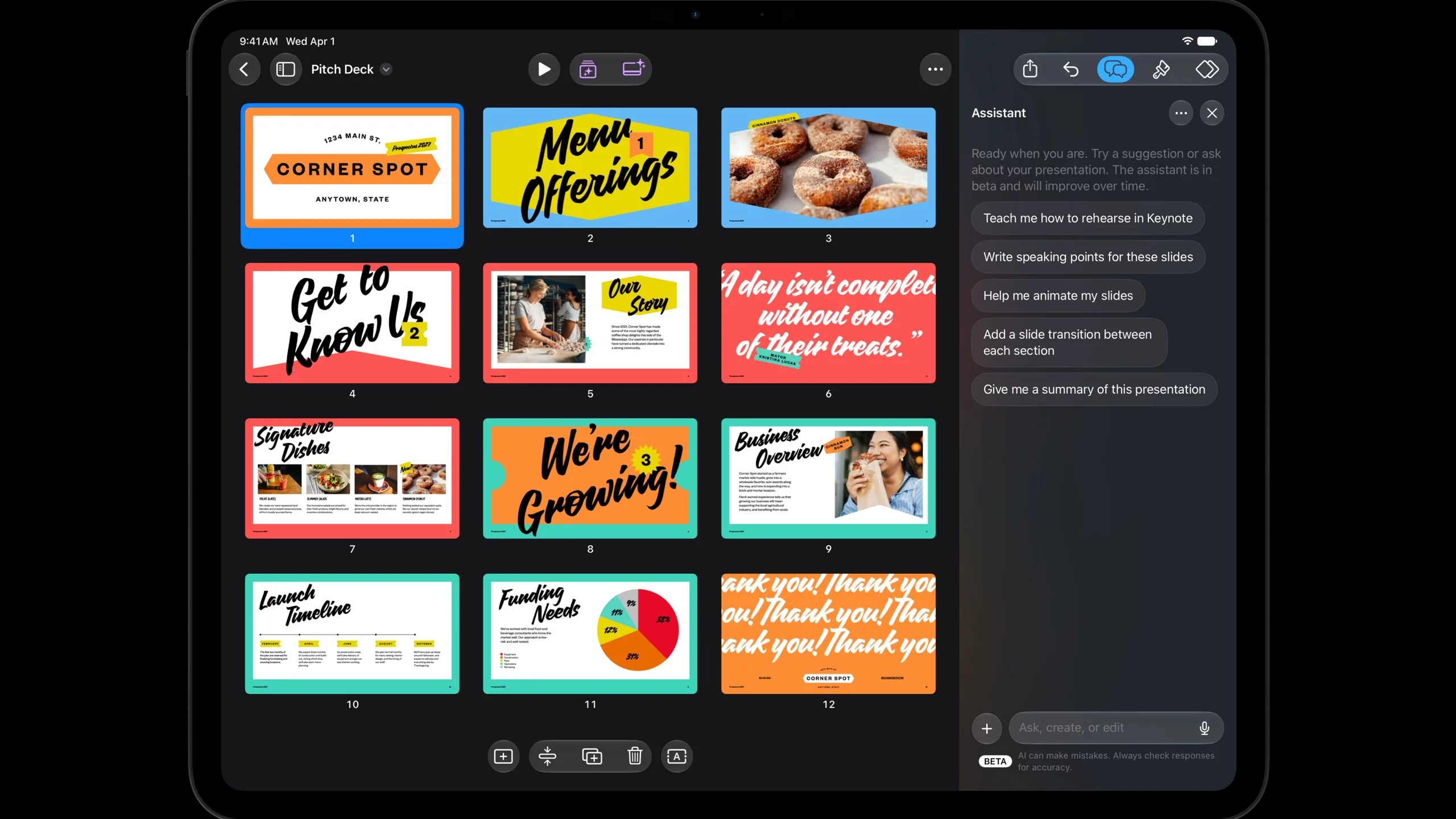
Apple lets outside AI agents into Keynote, Pages and Numbers
Apple opens Keynote, Pages and Numbers to AI agents via MCP. Plus Genie 4, the ETH refutation claims, the Aokigahara stealer and Xreal Aura.

October 29th, 2026
AI funding in Austria
Which grants for AI projects in Austria are still open at the end of 2026. Vienna, FFG, federal states and training, with rates and deadlines.
Ready to connect the dots?

Hi, I’m Emir, CEO and Co-Founder of Dotbite.
You have an interesting idea for a digital project and are looking for a sparring partner pushing the challenge through with you?
You’ve come to the right place.
