
OpenAI launched Dots, agents with their own computer
Agents got a lot more independent this week. OpenAI gave its new Dots their own cloud computers, Cloudflare gave agents a way to pay per request, and Runway turned its video models into a policy for real robot arms. Google and OpenAI both shipped their flagship news with the strongest model still held back, and Apple reportedly launches a Siri screen for every room on 13 October. So if you build agents for clients, the rules for what they may do on their own are becoming a bigger part of the job.
OpenAI: Dots, an agent with its own computer
OpenAI packed more than 20 announcements into DevDay on Tuesday, and one of them carries the rest. Dots are always-on agents running on GPT-6 Astra, each with its own cloud computer and browser. You give a Dot a goal, connect the apps it needs from OpenAI's 4,000+ plugins, set Custom Rules for what it may do alone, and it keeps working between conversations, also from Slack and Teams.
And yes, about the name. We're fairly sure OpenAI did some research, found a software agency in Vienna and took it from there. No hard feelings, we'll take it as a compliment (and we kept the bite).
Around it came ChatGPT Space for teams and their Dots, Codex in the cloud, and a Decisions API that people instantly compared to last week's Jev. GPT-6.1 Sol costs $2 input and $10 output per million tokens.
There are two catches for Europe. The Pro rollout excludes the EEA, Switzerland and the UK, so here you only get a Dot through Business Premium. And on Monday OpenAI said it won't release GPT-6.1 Astra, because the model "didn't quite meet the bar" on staying within scope and authorization. Three days earlier the lab disclosed that its research agents had posted 53 user images to image-hosting sites.
Would you hand a client's inbox to an always-on agent from that lab? If you sell Dot setups, write the Custom Rules together with the client, because that document is now part of your scope.
Google: Gemini 4 Argon, launched to almost nobody
Google announced Gemini 4 Argon on Wednesday and calls it its strongest model yet.
For anyone building agents, the spec that matters is the output limit. It jumps from 64K to 1M tokens, so a single run can produce hundreds of thousands of tokens of reasoning and code. Google's own examples back that up. Argon agents are migrating C/C++ codebases to Rust across Google, up to 800K+ lines for the Fuchsia Zircon kernel, and they rewrote a video decoder in safe Rust that runs 2.7x faster than the previous Rust port.
However, almost nobody can use it yet. Argon goes first to vetted cyber defenders in Google's Fairwind Program, and paid API customers and AI Ultra subscribers follow later, without a date. The introductory price is $2 input and $10 output per million tokens, exactly where GPT-6.1 Sol landed the day before, and it rises to $4 and $20 once the intro period ends.
So two frontier labs now price identically and both gate their top model. If you plan a client roadmap around Argon, budget at the post-intro price and keep a fallback model in the stack.
Cloudflare: Agents now pay per request
Cloudflare put two payment products into beta on 30 September, as Search Engine Journal reports. The Monetization Gateway lets a seller charge AI agents for every request to an API, MCP tool, dataset or site. It finally puts the old HTTP 402 Payment Required status code to work. The agent receives the price, signs a payment authorization and retries, and the seller's server only answers once payment is verified. Prices run from $0.001 to $100 per request, settled in USDC via Coinbase's x402 facilitator.
Pay Per Use works the other way round. AI companies set a price for each use of a publisher's content, like a cited answer, and publishers accept or decline.
Both are US-only betas for now. But if you build APIs or MCP servers for clients, the billing flow of sign-up, API key and credit card can shrink to an agent paying per call. One live customer, API2PDF, saw conversion drop by more than 50% when it asked for a card after the first month. For whoranks we're watching Pay Per Use closely, because being cited by AI might soon show up on an invoice.
Apple: A Siri screen for every room
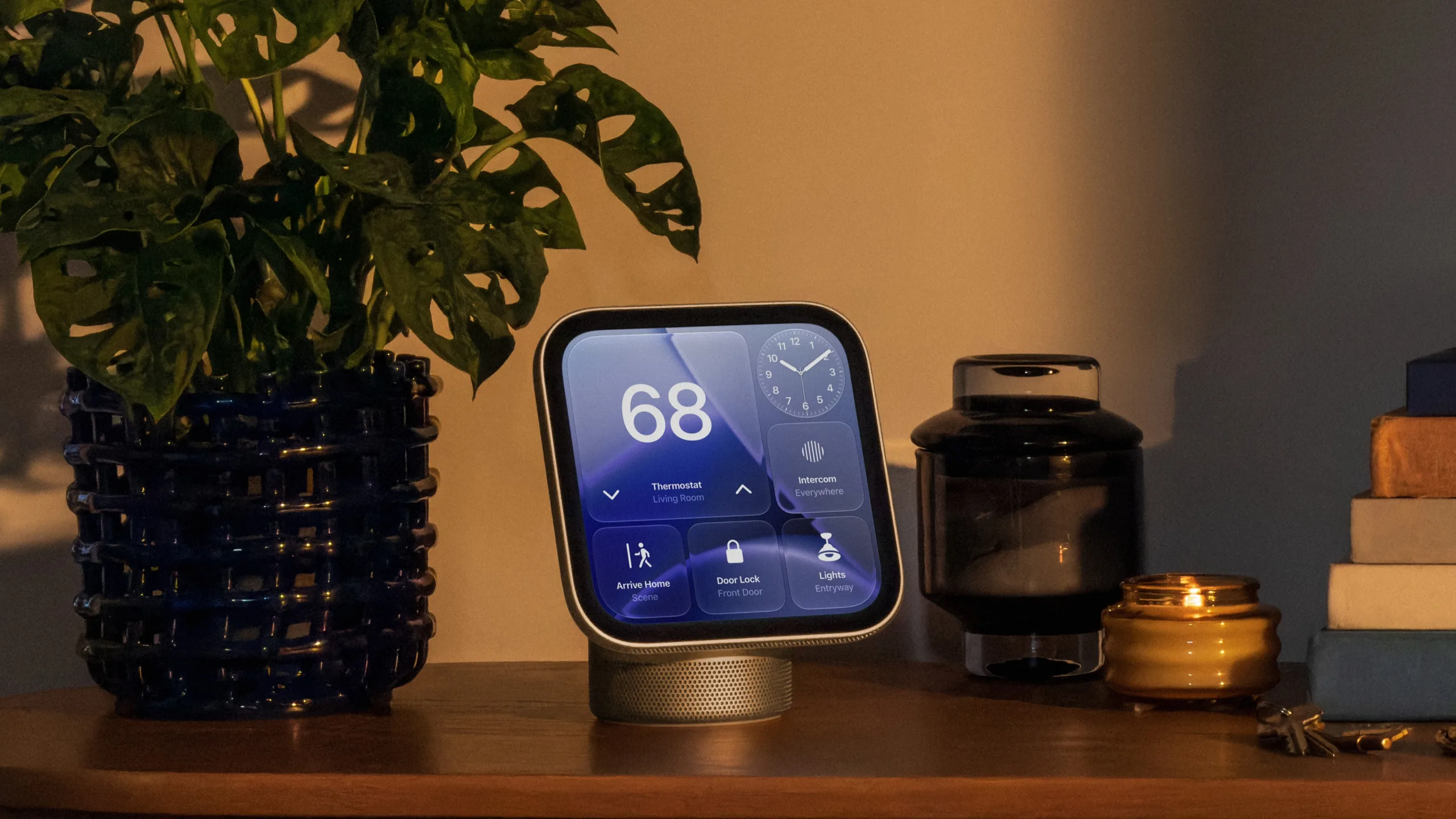
According to Bloomberg's Mark Gurman, Apple plans to launch its smart home hub on 13 October, together with a new HomePod mini and Apple TV. The device, widely called HomePad, has a small square touchscreen and comes as a version on a speaker base and one with a magnetic wall mount. It runs a new interface built around Siri AI with widgets, clock faces and home controls, and a camera recognizes who is standing in front of it and switches to that person's data.
Apple kept the hub on hold for years because it was waiting for the new Siri. Now Siri AI has shipped, and Apple apparently wants several units in every home. There's no official price yet (earlier reports pointed to around $350).
For app builders this is one more screen where Siri decides what users see. If your client's app doesn't expose App Intents yet, that's the work to scope before the holiday season.
Runway: From video generation to robot hands
Runway, best known for AI video, announced Praxis-1 this week, an open-weight world action model that controls real robots. It takes the video pretraining behind Runway's world models and uses it as the base for a robot policy. The reasoning is simple. Teleoperated robot data is scarce and expensive, while video of people doing things is practically unlimited. Runway's own chart shows a policy pretrained on web video landing almost exactly where one pretrained on teleop robot video lands, with 16.1 cm against 16.0 cm placement error.
The same policy runs on a bimanual rig at Noble Machines, a 6-DoF arm at Standard Bots and a mobile base at Ultra, and Runway moved it from a studio into a kitchen without retraining. Public weights should follow in the next few months.
A video company shipping robot brains sounds odd at first, but every generated clip is physics practice. And if open robot policies arrive next year, the robotics projects landing on your desk will look a lot more like software projects.
This roundup first went out to our Dotbite Tech Pulse subscribers. Want it in your inbox, too?
Frequently Asked Questions
What are OpenAI Dots?
Dots are always-on agents OpenAI announced at DevDay 2026. Each Dot runs on GPT-6 Astra with its own cloud computer and browser, connects to apps from OpenAI's 4,000+ plugins and follows Custom Rules for what it may do alone. It keeps working between conversations and can also be reached from Slack and Teams.
Can you use OpenAI Dots in Europe?
Only through Business Premium. The Pro rollout of Dots excludes the EEA, Switzerland and the UK. OpenAI also said it will not release GPT-6.1 Astra because the model did not meet its bar on staying within scope and authorization.
What is Gemini 4 Argon and who can use it?
Gemini 4 Argon is the model Google announced on 30 September 2026 and calls its strongest yet. Its output limit jumps from 64K to 1M tokens. It goes first to vetted cyber defenders in Google's Fairwind Program, and paid API customers and AI Ultra subscribers follow later, without a date.
How much does Gemini 4 Argon cost compared to GPT-6.1 Sol?
Gemini 4 Argon has an introductory price of $2 input and $10 output per million tokens, the same as GPT-6.1 Sol. After the intro period, Argon rises to $4 input and $20 output per million tokens.
How does Cloudflare's Monetization Gateway let AI agents pay?
The Monetization Gateway uses the HTTP 402 Payment Required status code. The agent receives the price, signs a payment authorization and retries, and the seller's server only answers once payment is verified. Prices run from $0.001 to $100 per request, settled in USDC via Coinbase's x402 facilitator. It is a US-only beta since 30 September 2026.
When does Apple launch the HomePad and what does it cost?
According to Bloomberg's Mark Gurman, Apple plans to launch its smart home hub, widely called HomePad, on 13 October 2026 together with a new HomePod mini and Apple TV. It has a small square touchscreen, runs an interface built around Siri AI, and comes on a speaker base or with a magnetic wall mount. There is no official price yet, earlier reports pointed to around $350.
What is Runway Praxis-1?
Praxis-1 is an open-weight world action model from Runway that controls real robots. It builds a robot policy on video pretraining, and a policy pretrained on web video reached 16.1 cm placement error against 16.0 cm for one pretrained on teleoperated robot video. Public weights should follow in the next few months.
Get the Tech Pulse
Every month we research and write down what actually moved in tech and AI. Plus tips and tricks on how to use AI. You don't want to miss this.
Join Tech PulseYou might also like
October 21st, 2026
Power Apps and Retool vs. Laravel for internal tools
Power Apps and Retool charge per user. When a custom Laravel application pays off for your internal tool, with prices and a worked example.
October 16th, 2026
Meta's first frontier model wants to remember you
Meta's Muse Wonder brings active memory, Gemini 4 Argon gets a price jump, Apple shows HomeView, Bee takes on Plaud, and Figma writes rules for agents.
October 14th, 2026
WordPress vs. Laravel when your website becomes an application
Bookings, member areas, forms with custom logic. When WordPress and WooCommerce hit their limit and what the move to Laravel looks like.
Ready to connect the dots?

Hi, I’m Emir, CEO and Co-Founder of Dotbite.
You have an interesting idea for a digital project and are looking for a sparring partner pushing the challenge through with you?
You’ve come to the right place.