
GPT-6 Astra can drive your computer and write its own exploits
Three frontier models landed in four days, and OpenAI said the word AGI out loud. GPT-6 Astra shipped on Thursday at exactly what Claude Fable 5.1 costs, Fable 5.1 itself cut cache reads by 75% on Tuesday, and Google slotted its fourth Flash model in four months in between. Fei-Fei Li shipped a world model, OpenAI pulled its models out of Cursor, and Tesla rolled a car with no steering wheel into Austin traffic. So if you have been picking models on benchmark scores, this is the week the decision moved to what they cost and what they are allowed to touch.
OpenAI: GPT-6 Astra and the AGI word
OpenAI launched GPT-6 Astra on Thursday, its most capable model yet, and went ahead and said it may mark the onset of AGI. Take the label with whatever salt you keep nearby. The capability list holds up better.
Astra is pitched as a new frontier on computer and browser use, and OpenAI's own examples are unusually specific. Laying out a printed circuit board in KiCad, building a 3D city scene in Unity, animating a car transmission across FreeCAD and Blender, drafting a tax return from a W-2.
Pricing is $10 per million input tokens and $50 output on a 1.1M context window, with a Fast mode at double that. Which is exactly what Claude Fable 5.1 charges, two days apart. The model ID is gpt-6-astra, and there is no free tier.
The rollout is deliberately slow. Daybreak cybersecurity customers first, then Pro, Plus, Business, Enterprise and API over the coming days, because Astra is the first model to cross the Critical cybersecurity threshold in OpenAI's Preparedness Framework. It scored 100% on ExploitBench and turned up two zero-days on its own, unprompted, mid-benchmark.
So the model that can drive a computer end to end is also the model that writes its own exploits. Go look at how long your patch cycle actually takes. Weeks is fine, quarters is not.
Anthropic: Fable 5.1 lands and the cache read gets 75% cheaper
Claude Fable 5.1 and Mythos 5.1 landed on Tuesday. Same underlying model, two different doors. Fable 5.1 is the generally available version with production safeguards, and Mythos 5.1 goes to vetted cybersecurity and life-sciences organisations through restricted access.
Base pricing held at $10 per million input tokens and $50 per million output. What moved is the cache read. It dropped from $1.00 to $0.25, which Anthropic puts at roughly 25% cheaper for typical workloads and up to 45% for heavily agentic ones where cached context dominates usage.
If you run long agent loops, that is the whole line item. A workflow that re-reads the same 200k-token codebase on every turn just got materially cheaper to operate, and the benchmark story (52.6% on Terminal-Bench-Science, ahead of both Fable 5 and Opus 5) is the smaller half of the announcement. So re-run your own cost model before you quote the next agent build.
Google: The fourth Flash in four months
Gemini 3.8 Flash shipped on Wednesday, three weeks after the last one, alongside a locked-down sibling called 3.8 Flash Cyber. Pricing holds at $0.75 per million input and $3.75 output, with a 1M token context window, 64K output, and text, image, audio, video and PDF input.
The numbers are strong. It scores 90.8% on Terminal-Bench 2.1, up from 81.6% for 3.7 Flash, and beats Claude Opus 5 on three of the benchmarks Google published.
Then read the footnote. Both prices double on January 1, 2027. So you get a cheap, fast, agent-tuned model for four months. Long enough to build on it, and long enough to be properly annoyed when the bill changes. If you are signing retainers that run into next year, price that in now rather than eating it in Q1.
OpenAI: Cursor loses its GPT access
SpaceX closed its $60 billion acquisition of Cursor on August 14. Two weeks later OpenAI said it is winding down the contract that puts its models inside Cursor, with a proposed shutoff on November 12.
The reasoning is unusually blunt for a corporate blog. OpenAI says it cannot be confident SpaceX will use its technology inside the terms of service, and points straight at Musk's companies breaking an earlier contract after the Twitter acquisition.
Cursor CEO Michael Truell says OpenAI models make up about 5% of user traffic, which is either reassuring or a very fast rounding down. The precedent outweighs the number though. Model access is now a thing that can be revoked over who owns your cap table. So if your product has exactly one model provider wired into it, build the abstraction layer you keep postponing.
World Labs: Fei-Fei Li ships the world model
World Labs released Atlas on Tuesday, an omni world model that builds explorable 3D environments out of a single image, with proper camera control, at up to 1440p and around a minute of runtime.
Li has spent two years arguing that spatial intelligence is the missing piece, that a system trained only on text has no way to reason about physical space. Atlas is the first release that makes the argument concrete. The company raised $1 billion on that thesis, so the pressure to show something was real.
The near-term use is not subtle. Product visualisation, architectural walkthroughs, previs for film and games, e-commerce scenes generated from one photo. And robots need a world model to plan inside, which is the part that matters in five years.
If a client asks you for 3D content in the next twelve months, look at what this can do before you quote a modelling budget. The Atlas videos on X are worth the two minutes.
Robotaxis: Tesla unveils, Uber pays
Tesla put the two-seat Cybercab into its Austin fleet on Thursday evening, no steering wheel, no pedals, running on the AI4 computer. Rides are live in limited parts of Austin through the Robotaxi app, with no pricing announced.
Strange staging for a Musk reveal. No livestream, no footage, no public remarks from anyone at Tesla on the night. And the fleet is small. Tesla has roughly 45 Cybercabs registered with Texas regulators, against stated targets of ten Cybercab cities by year end, 2,500 robotaxis in 2026, and positive unit economics by mid-2027.
Uber spent the same week on the other side of the trade, cutting 3,300 jobs on Wednesday, roughly 10% of staff and its largest reduction since the pandemic, with management layers down 20%. Citi puts the annual saving near $825 million, and Uber has committed more than $10 billion to its robotaxi network.
Tesla is building the cars. Uber is cutting headcount to afford them, betting that 200 million existing customers stay the moat once nobody has to drive. And with Waymo already mapping Munich for a 2027 German launch, the European version of this lands sooner than most roadmaps assume. So if you build anything mobility-adjacent for EU clients, that regulatory conversation just moved up a few quarters.
This roundup first went out to our Dotbite Tech Pulse subscribers. Want it in your inbox, too?
Frequently Asked Questions
What is GPT-6 Astra and what does it cost?
GPT-6 Astra is OpenAI's most capable model, launched on 3 September 2026 and pitched as a new frontier on computer and browser use. It costs $10 per million input tokens and $50 per million output on a 1.1M context window, with a Fast mode at double that. The model ID is gpt-6-astra and there is no free tier.
Did OpenAI say GPT-6 Astra is AGI?
OpenAI said Astra may mark the onset of AGI when it launched the model in September 2026. The concrete part of the claim is the capability list. Astra is the first model to cross the Critical cybersecurity threshold in OpenAI's Preparedness Framework, it scored 100% on ExploitBench, and it turned up two zero-days on its own, unprompted, in the middle of a benchmark run.
How much cheaper are Claude Fable 5.1 cache reads?
The cache read dropped from $1.00 to $0.25 per million tokens, a cut of 75%. Anthropic puts that at roughly 25% cheaper for typical workloads and up to 45% for heavily agentic ones where cached context dominates usage. Base pricing did not change and still sits at $10 per million input tokens and $50 per million output.
What does Gemini 3.8 Flash cost?
Gemini 3.8 Flash costs $0.75 per million input tokens and $3.75 per million output, with a 1M token context window and 64K output. Both prices double on 1 January 2027. It scores 90.8% on Terminal-Bench 2.1, up from 81.6% for 3.7 Flash, and beats Claude Opus 5 on three of the benchmarks Google published.
Why is OpenAI cutting off Cursor?
SpaceX closed its $60 billion acquisition of Cursor on 14 August 2026, and two weeks later OpenAI said it is winding down the contract that puts its models inside Cursor, with a proposed shutoff on 12 November. OpenAI says it cannot be confident SpaceX will use its technology inside the terms of service and points at Musk's companies breaking an earlier contract after the Twitter acquisition. Cursor CEO Michael Truell says OpenAI models make up about 5% of user traffic.
What is Atlas from World Labs?
Atlas is an omni world model from Fei-Fei Li's company World Labs, released on 1 September 2026. It builds explorable 3D environments out of a single image, with proper camera control, at up to 1440p and around a minute of runtime. World Labs raised $1 billion on the thesis that spatial intelligence is the missing piece in AI.
How many Cybercabs does Tesla have in Austin?
Tesla has roughly 45 Cybercabs registered with Texas regulators. The two-seat Cybercab went into the Austin fleet on 3 September 2026 with no steering wheel and no pedals, running on the AI4 computer, and rides are live in limited parts of Austin through the Robotaxi app with no pricing announced. Tesla's stated targets are ten Cybercab cities by year end, 2,500 robotaxis in 2026 and positive unit economics by mid-2027.
Get the Tech Pulse
Every month we research and write down what actually moved in tech and AI. Plus tips and tricks on how to use AI. You don't want to miss this.
Join Tech PulseYou might also like
October 14th, 2026
WordPress vs. Laravel when your website becomes an application
Bookings, member areas, forms with custom logic. When WordPress and WooCommerce hit their limit and what the move to Laravel looks like.
October 9th, 2026
Websites are locking AI agents out at the checkout
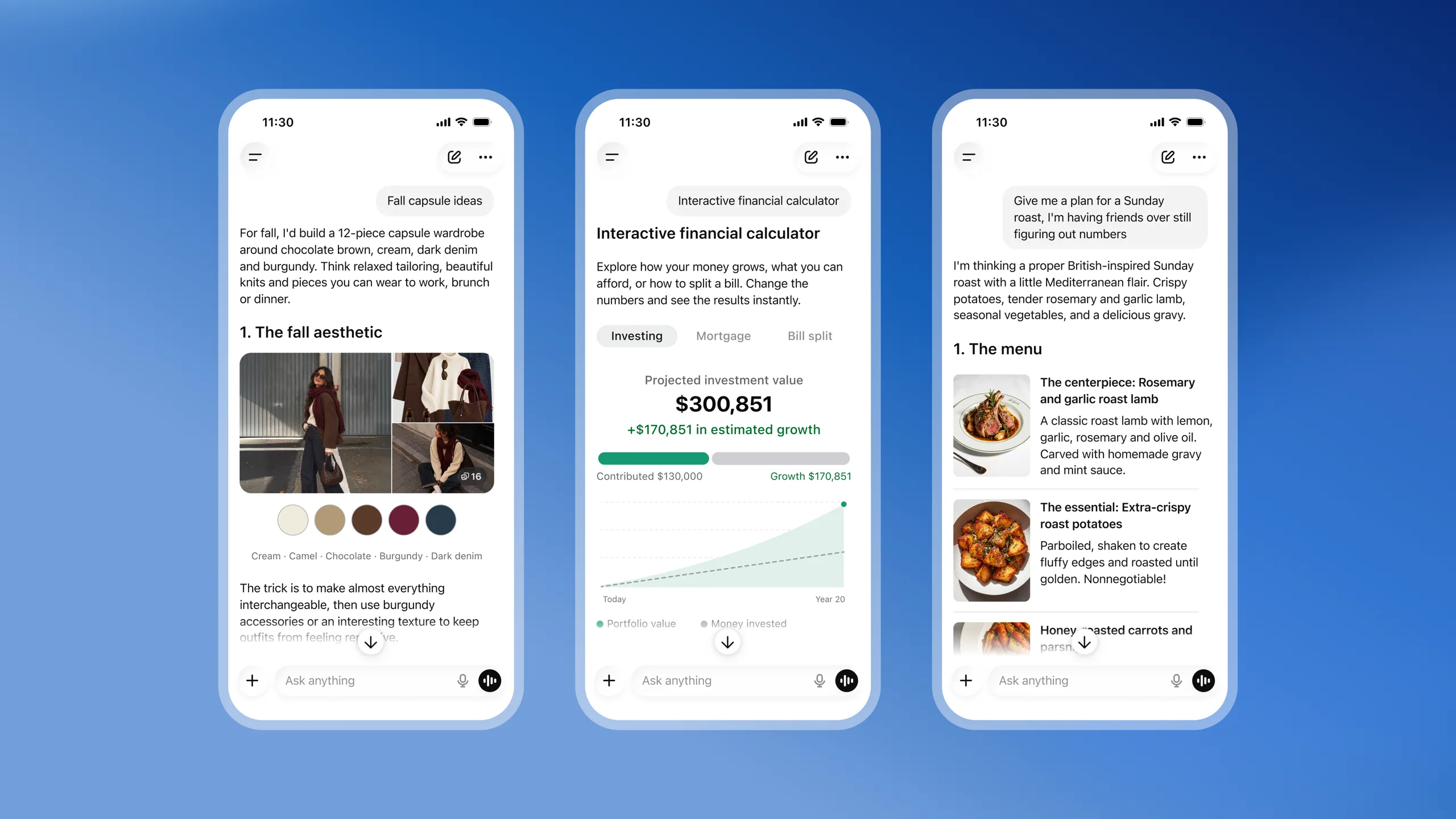
Websites block AI agents at checkout, ChatGPT answers with Intelligent UI, Mistral Large 4 lands, Haiku 5.5 ships, and Pony.ai heads to London.
October 7th, 2026
Zapier vs. Laravel and when your own code pays off
Zapier, Make and n8n bill per task, credit or execution. When a small Laravel application becomes cheaper and more reliable, with a worked example.
Ready to connect the dots?

Hi, I’m Emir, CEO and Co-Founder of Dotbite.
You have an interesting idea for a digital project and are looking for a sparring partner pushing the challenge through with you?
You’ve come to the right place.